
Skip to content
Poor Posture support at ThermoCare, Banashankari, Bengaluru
Start with how you feel

Posture Support in Banashankari, Bengaluru

Improve alignment and reduce discomfort.

ThermoCare offers supportive therapy for posture-related discomfort at its Banashankari 3rd Stage clinic in Bengaluru, combining spine care support and massage therapy with practical, everyday habit suggestions. This is comfort-focused wellness care, not a clinical postural assessment.

Therapies used
Spine care support, massage therapy
First visit
Around 45–60 minutes for a first visit
Where
Banashankari 3rd Stage, Bengaluru 560085
Often follows
Long desk hours, extended screen time, long commutes
How to book
Call, WhatsApp, or request a time through the contact page

How does posture cause discomfort?

Posture itself is rarely the whole problem. Holding any one position for long enough is, and modern working life is full of them: a laptop below eye level, a chair without back support, a two-hour commute, an evening spent leaning over a phone.

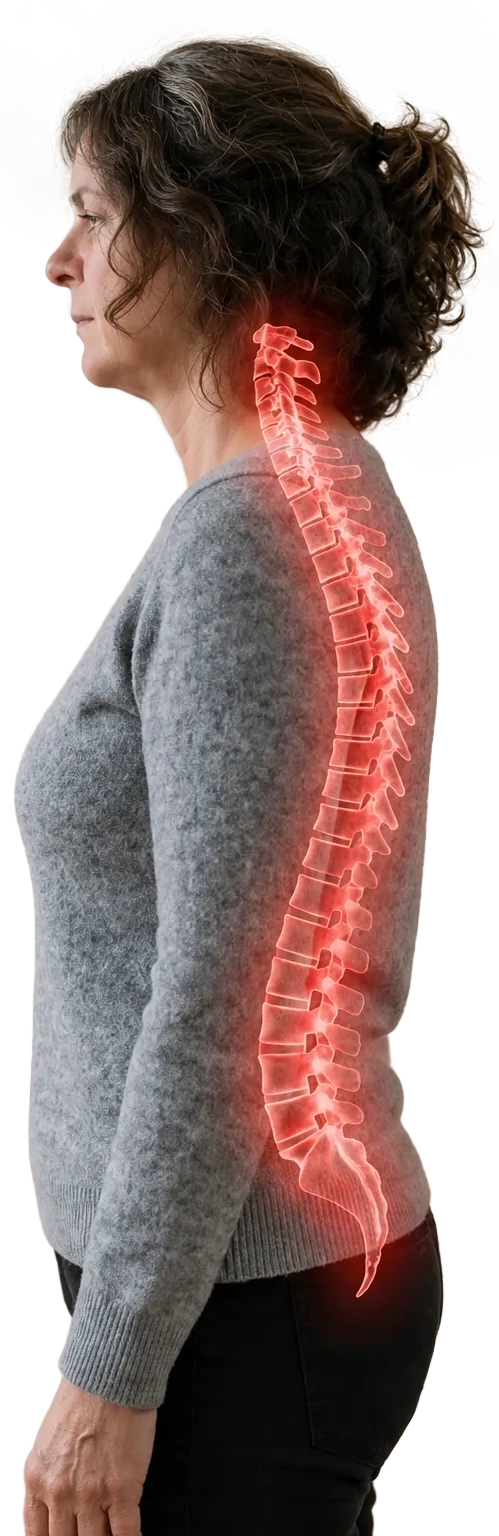
The result is usually familiar. A rounding through the upper back, tightness across the chest and front of the shoulders, a neck that carries the head slightly forward, and lower-back stiffness that arrives late in the day.

What does ThermoCare do about posture-related discomfort?

The visit begins with a conversation about your day: how many hours you sit, what your desk setup looks like, how you commute, and where the discomfort actually shows up.

Sessions then focus on easing the areas that have tightened, using spine care support and massage therapy. Alongside that, the practitioner will suggest a few small, realistic adjustments to how you sit, stand and move, chosen to fit your actual day rather than an ideal one.

Can therapy correct my posture?

Not on its own, and we will not tell you otherwise. A session can ease the tension that a habitual position has created, which often makes it easier to hold yourself differently. What changes posture over time is the daily habit, not the hour on the table.

That is why the habit conversation is part of the visit rather than an afterthought, and why we would rather you left with two changes you will actually make than ten you will not.

What small changes tend to help most?

The suggestions are unglamorous and they work: raise the screen so the top of it is near eye level, get the feet flat on the floor, stand up on a regular interval rather than when you finally notice the stiffness, and change which shoulder carries the bag.

These are general comfort suggestions for everyday stiffness. They are not a treatment plan, and they are not a substitute for medical advice about a specific spinal problem.

Safety comes first

When to see a doctor instead

Supportive therapy should never delay assessment for severe, sudden, worsening or unexplained symptoms.

Read our medical disclaimer
  • 01

    A visible change in spinal shape or a curve that seems to be progressing.

  • 02

    Numbness, tingling or weakness in an arm or leg.

  • 03

    Back or neck pain following a fall or accident.

  • 04

    Pain that wakes you consistently at night, or comes with unexplained weight loss.

  • 05

    Any symptom that is severe, sudden, worsening, or unexplained.

Questions are welcome

Common questions about poor posture

If your question is not covered here, ask us before making a booking.

No. ThermoCare offers supportive natural wellness therapy, not physiotherapy or a clinical postural assessment. If you need a diagnosis or a prescribed rehabilitation programme, please see a doctor or physiotherapist.

A session can ease the tension those hours build up, and the practitioner will suggest realistic adjustments to your setup. The hours themselves are the larger factor, and we would rather be straightforward about that.

No. The conversation is about where you feel discomfort and what your day actually looks like, not about correcting how you hold yourself.

Allow around 45 to 60 minutes for a first visit, including the opening conversation and time at the end to talk through what might help between visits.

The practitioner may suggest simple, general comfort habits. Prescribed therapeutic exercise for a diagnosed condition is a doctor's or physiotherapist's role, not ours.

Talk through poor posture with us.

A request, never a commitment. We will answer anything you are unsure about before you decide.